
Design as a Liberal Art: Reading “A New Program for Graphic Design”
I finished A New Program for Graphic Design last week and I have been carrying it around since, mostly so I can open it to a random page. David Reinfurt built the book from roughly eight years of teaching the Typography Studio at Princeton. Inventory Press published it in 2019, with a foreword by Ellen Lupton and a preface by Adam Michaels.
The structure is simple. Three courses become three chapters: Typography, Gestalt and Interface. Each one moves through history and then hands you an assignment. Benjamin Franklin shows up as a printer. Bruno Munari, László Moholy-Nagy, Paul Rand, Muriel Cooper and Susan Kare all pass through. It reads less like a textbook and more like sitting in a good lecture where the professor keeps pulling things off the shelf.
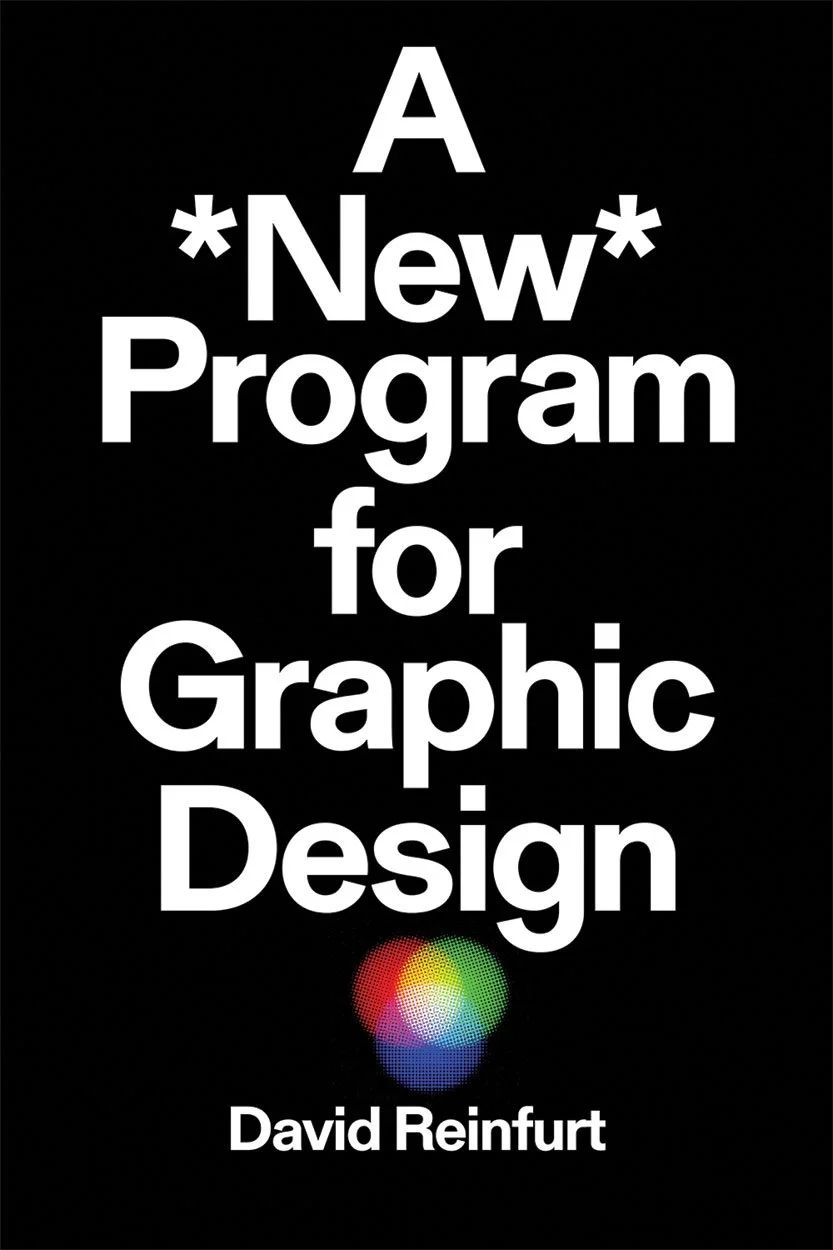
What stayed with me is the argument underneath. Reinfurt treats graphic design as a liberal art, a way of thinking that helps any field communicate what it knows. Not a trade skill bolted onto the end of a project. I have spent a lot of my career translating research into something a person can read on a wall or a screen. For federal transportation clients, that translation is the whole job. Seeing it framed as a discipline of its own, with its own history and its own exercises, felt like permission to take that work more seriously.
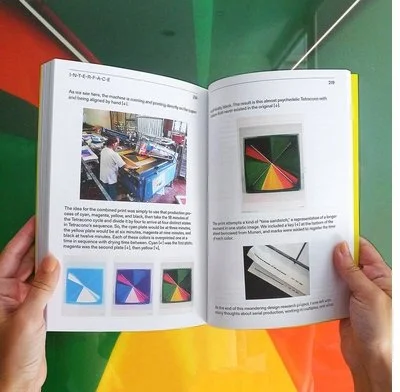
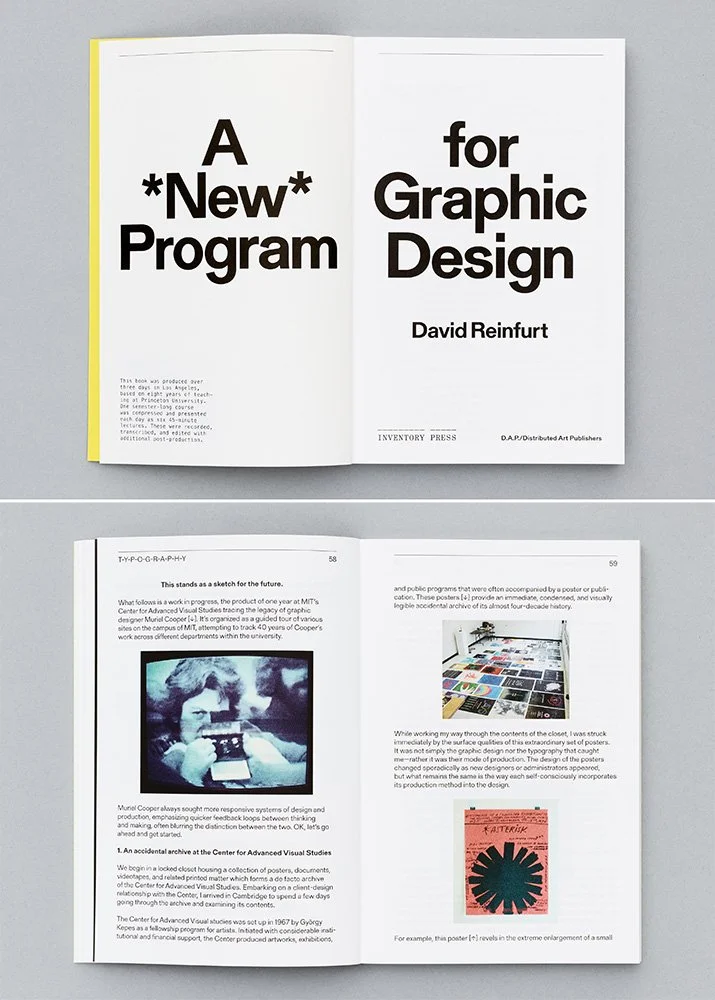
The Interface chapter pushed me furthest. Reinfurt defines interface broadly: whatever lets different elements link up and talk to each other. By that definition a highway sign is an interface. So is a book's table of contents, or the black band across the top of a park brochure. Once you see it that way, it is hard to stop.
A few things I am taking from it:
Assignments are worth doing even if you have been working for years. I plan to work through several of them this fall and post the results here.
History is a tool, not a credential. The case studies are there because they are useful, not to prove the author has read them.
Small books can carry big ideas. It is a 6 x 9 paperback. It does not need to be more.
If you teach, this is a syllabus you can borrow. If you practice, it is a reminder of why the work matters past the deliverable. I would put it on the short shelf next to the books I return to every year.
