A Small Red Book About the Future: “After All, There Is No Finish Line”
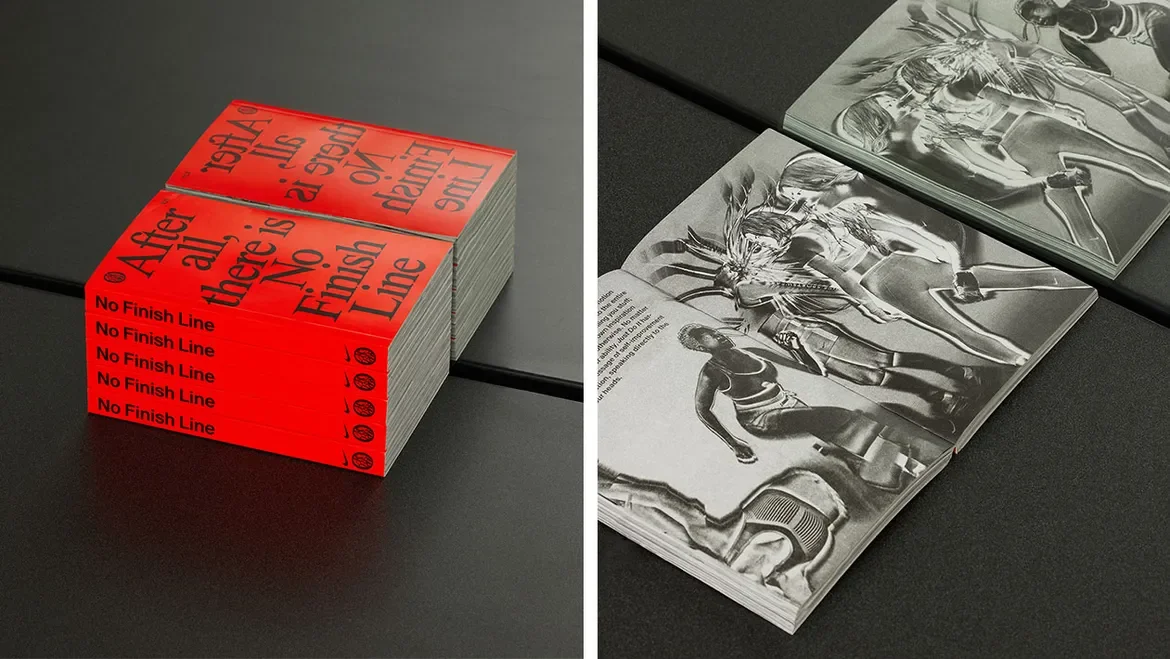
Most brand books are coffee table books. Big, heavy, built to be seen rather than read. After All, There Is No Finish Line goes the other way. It is a 192 page paperback about the size of a novel, with a cover in Nike's signature orange. You could read it on a train. That choice says more about the book than any blurb.
It was published by Actual Source, the Provo, Utah publisher and design practice co-run by my college friend Davis Ngarupe. The design is by Zak Group, with illustrations by Bráulio Amado and synthesized imagery by PWR. John Hoke, Nike's Chief Design Officer, writes the foreword.
The content is half essay, half speculative fiction. Sam Grawe's essays come out of interviews with Nike's designers, scientists and engineers, and they name five shifts he expects over the next 50 years:
From product to platform
From performance to promise
From elite to everyone
From sustainable to symbiotic
From static to sensorial
The fiction then plays those shifts out as stories. It is an unusual move for a company book, and it works because it admits nobody knows exactly what is coming.
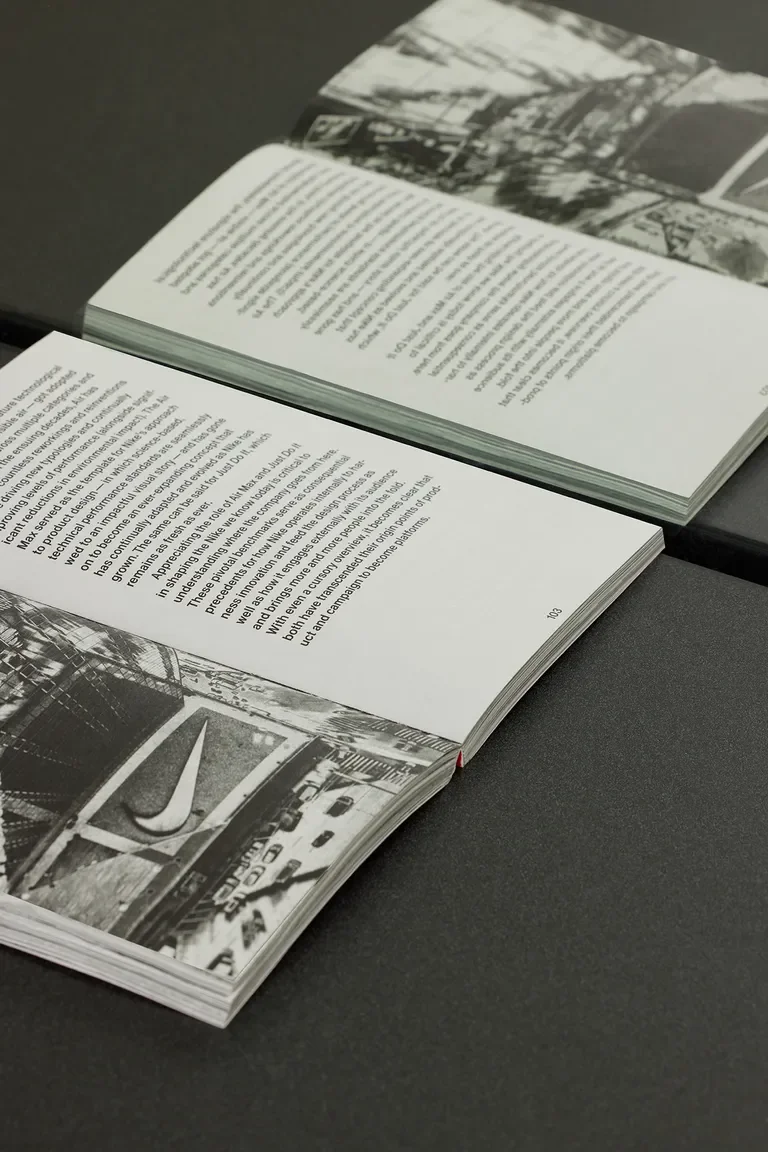
What I keep thinking about is the tension in the design. The subject is the future, but the pages are mostly black and white, built from collage, found images and dense type. It has the feel of an old zine. That contrast keeps it from reading like a press release. The future feels handmade instead of polished, which is probably closer to how it actually arrives.
A few takeaways for anyone making a book for a brand:
Format is a message. Pocket size says "read me," not "display me."
Let the brand show up once, clearly. The orange cover does the work. The interior is free to be itself.
Point of view beats inventory. This is not a catalog of 50 years of shoes. It is an argument about where things are going.
I am working on a book series of my own right now, and this one sits on my desk as a reminder that a small object can hold a big idea if the format is honest about how people will use it.