
Read and Looked At: Why I Collect Dot Dot Dot
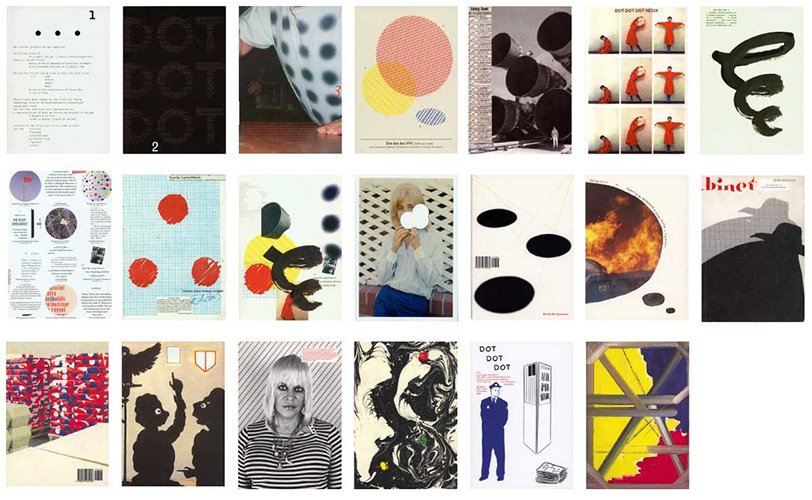
I collect Dot Dot Dot. Right now I have 10 of the 20 issues: 8, 10, 12, 13, 14, 15, 17, 18, 19 and 20. Most of the later run, very little of the early one. I am in no hurry to finish. Part of the fun is finding them: a used bookstore, a seller overseas, a friend who did not know what they had.
The magazine ran from 2000 to 2010, two issues a year, about 3,000 copies each. It was started by Peter Bil'ak and Stuart Bailey, and David Reinfurt joined as co-editor around issue 6. Bailey and Reinfurt went on to run Dexter Sinister together, and later the Bulletins of the Serving Library. If you read my post on Reinfurt's A New Program for Graphic Design, this is where a lot of that thinking was tested first.
What makes it worth collecting is that it is barely about graphic design, at least not in the portfolio sense. There are essays on music, language, art, history and the act of publishing itself. Some pieces are serious. Some are jokes that take ten pages to land. The editors wrote in the first issue that they wanted the magazine to be both read and looked at, and that is the best description I have found.
Most of my copies come from the back half of the run, where the layout settles into a plain two-column template set in Mitim, a custom typeface by Radim Peško. Side by side on the shelf, my issues from 12 on look almost too simple. Now that "default" look is everywhere in independent publishing, and you can trace a lot of it back here. Read more at AIGA Eye on Design.
Why I keep buying them:
They reward rereading. I open a random issue and find something I missed the first time.
They are proof that a small run can matter. 3,000 copies shaped a generation of designers. That is a good reminder as I plan my own runs of 500.
They treat the reader as smart. No hand-holding, no listicles.
Still looking for issues 1 through 7, 9, 11 and 16. If you have one sitting on a shelf, I would love to hear from you.
